
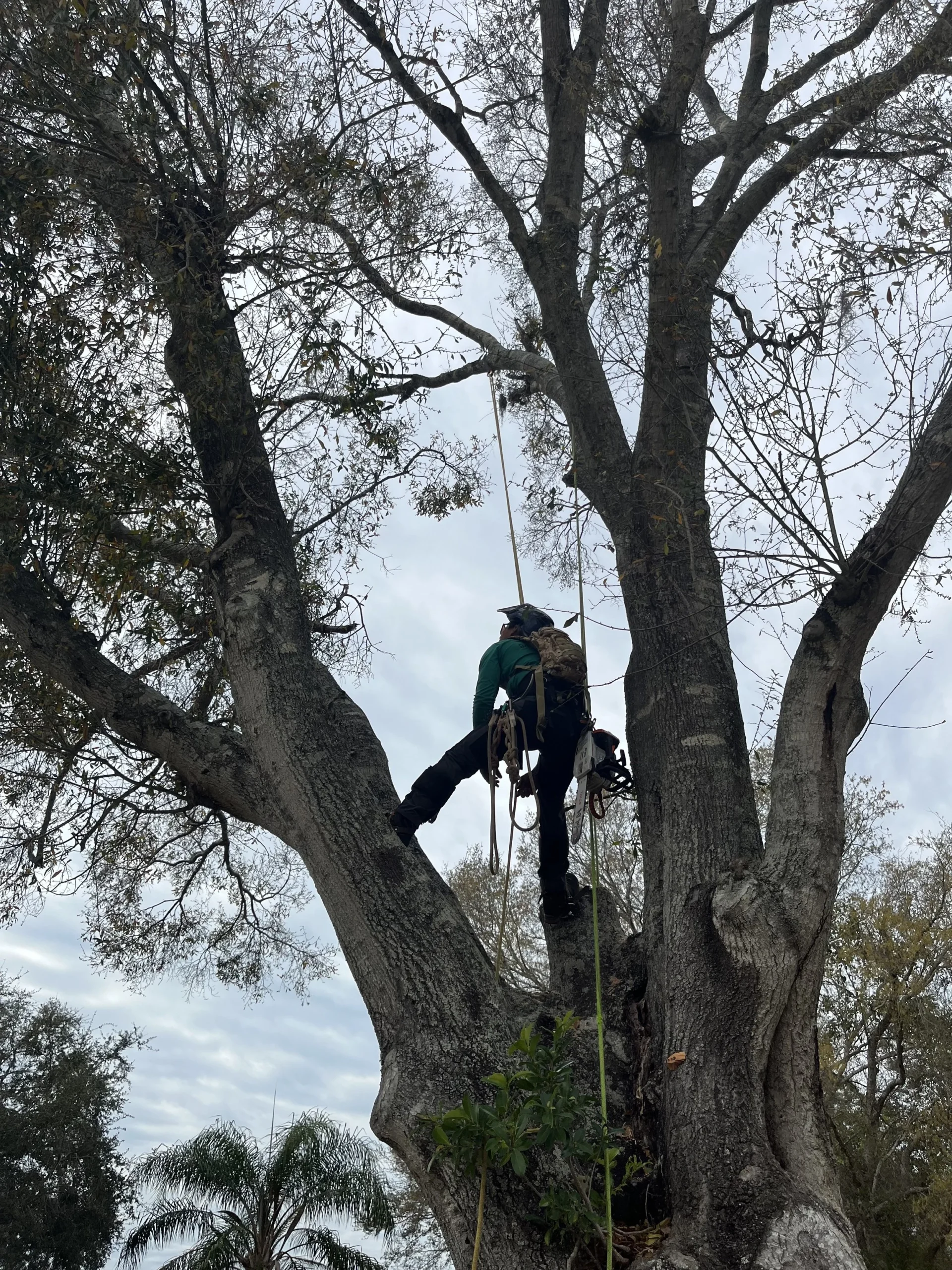
When Is the Best Time to Trim Trees in Florida?
Florida’s subtropical climate means tree trimming doesn’t follow the same seasonal rules as the rest of the country. Most tree care guides are written for northern climates where trees go completely dormant in winter — but in Sarasota, Bradenton, and Venice, many trees grow year-round. Here’s what local homeowners need to know about timing.
Why Timing Matters for Florida Trees
Trimming at the wrong time can stress a tree, trigger disease, or leave it more vulnerable to hurricane-force winds. In Florida, the decision is less about calendar season and more about the tree species, its current growth stage, and our unique storm calendar.
The Best Times to Trim in the Sarasota Area
Late Winter to Early Spring (February–April)
This is the ideal window for most trees in Southwest Florida. Temperatures are mild, humidity is lower than summer, and trees are finishing their rest period before the spring growth flush. Trimming now:
- Encourages vigorous, healthy new growth
- Reduces disease spread — fungal pathogens are less active in drier conditions
- Gives wounds time to callus before summer heat and humidity arrive
- Allows you to see the tree’s full structure before leaves flush out
After Hurricane Season (November–December)
Once the Atlantic hurricane season officially ends on November 30, it’s an excellent time to address storm damage, remove deadwood, and structure trees before winter. This window is also popular for canopy thinning — reducing wind resistance before the next season starts.
When to Avoid Heavy Trimming
During Active Hurricane Season (June–September)
Heavy pruning during summer stimulates tender new growth that’s more susceptible to wind damage. If a storm rolls through shortly after a major trim, that soft new growth takes the brunt of it. Stick to removing dead, broken, or obviously hazardous limbs during this period — leave structural pruning for cooler months.
During Active Growth Flushes
Trimming just as trees are pushing out new leaves forces the tree to repeat the energy-expensive process of growing new foliage. Wait until the growth flush has hardened off (new leaves turn darker green and firm up) before doing any significant pruning.
Tree-Specific Tips for Florida
- Live Oaks: Prune in late winter when oak wilt risk is lowest — the beetles that spread oak wilt are most active in warm weather
- Palms: Can be trimmed year-round, but never over-prune (the “hurricane cut” weakens the crown and can kill the palm)
- Crape Myrtles: Late winter if needed — avoid “crape murder” (topping), which destroys the natural form
- Citrus: Best trimmed in late winter after the fruit harvest is complete
- Laurel Oaks and Water Oaks: Fast growers that often need annual attention to control size and remove deadwood
Emergency Trimming: Any Time of Year
If a tree has dead, broken, hanging, or structurally compromised limbs — from storm damage, disease, or failure — don’t wait for the “right” season. Hazardous limbs should be removed immediately. Safety always comes first.
How Often Should Trees Be Trimmed?
Most mature trees benefit from a professional inspection and light trim every 2–3 years. Fast-growing species like laurel oaks may need annual attention. Palms typically need frond removal once or twice a year depending on variety. A certified arborist can assess your specific trees and recommend a schedule.
Ready to get your trees trimmed by a professional team? Yoder’s Tree and Land Services has been serving Sarasota, Bradenton, Venice, and Siesta Key since 2022. Call us at (941) 451-9730 or request a free estimate online.